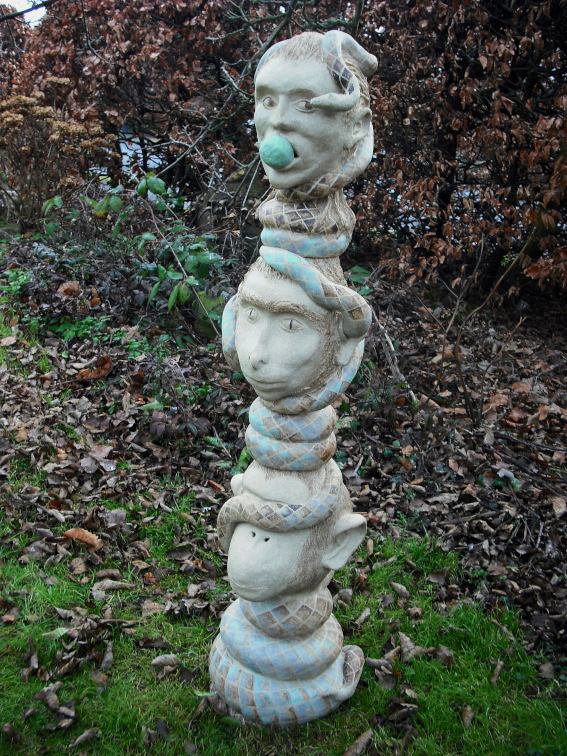
Evolution of Wisdom
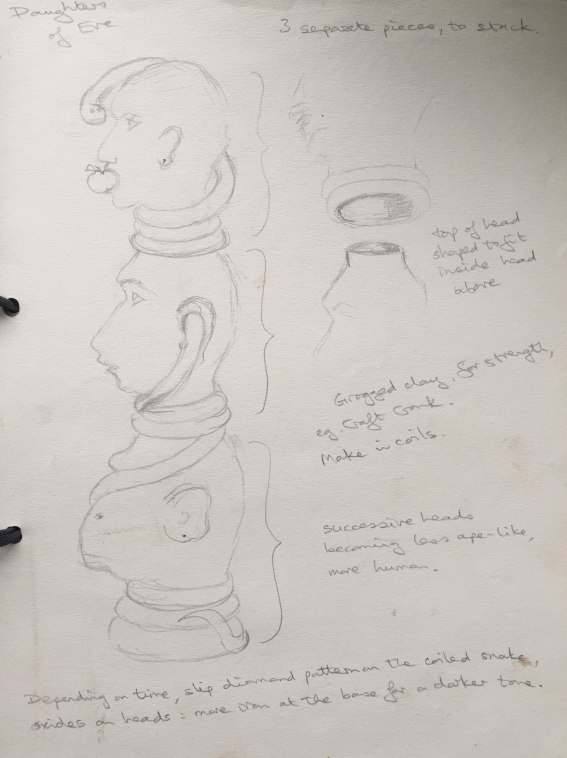
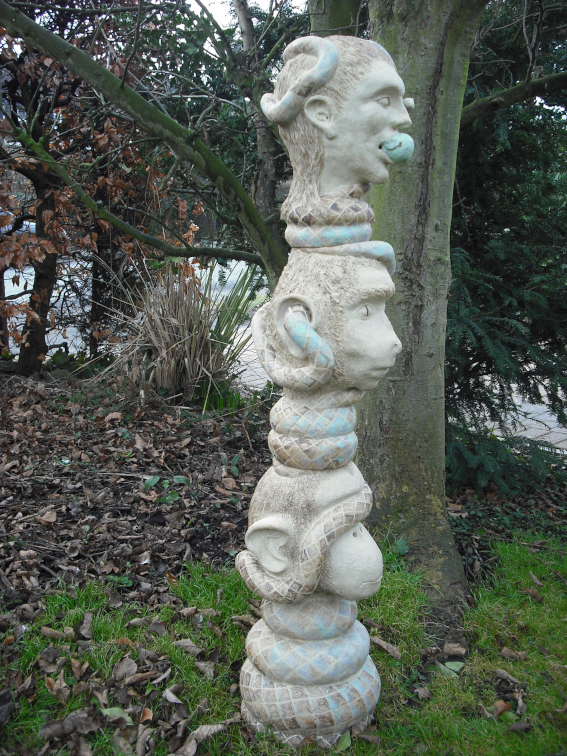
H100 W25cm. Coloured slips, stoneware. Three-piece stacking form
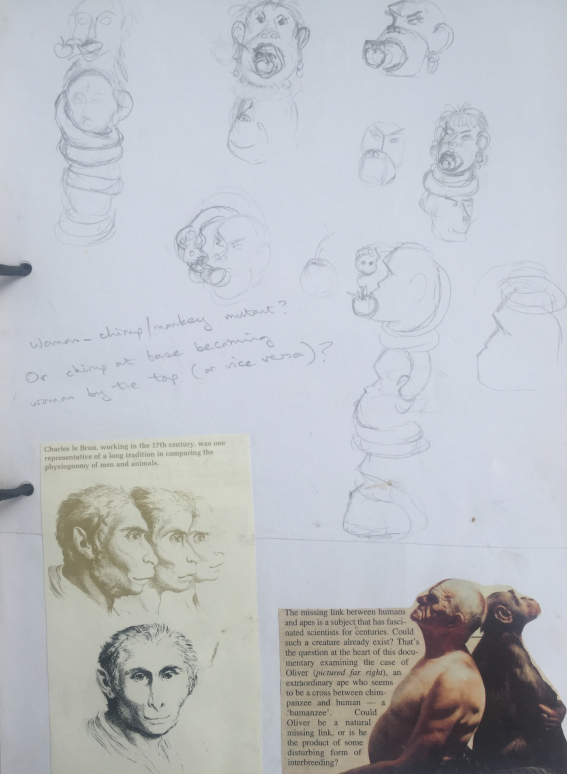
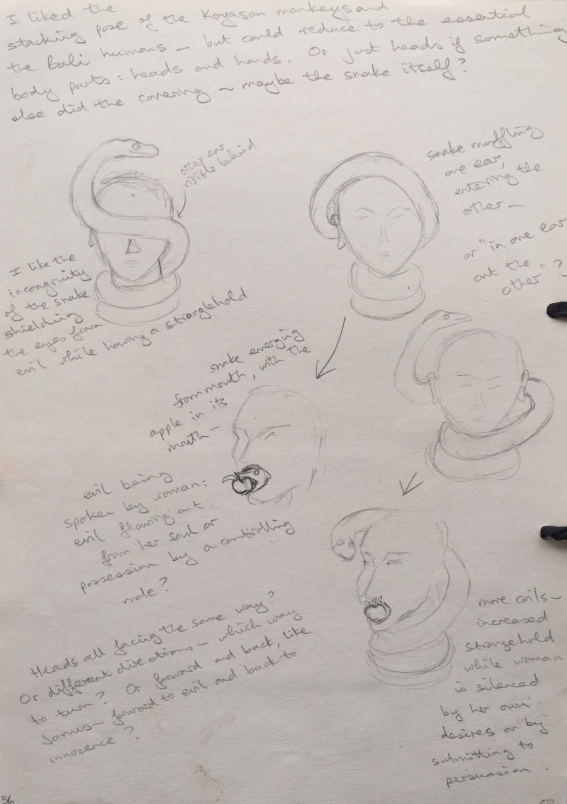
Seeing the carving at the Toshigo Shrine in Nikko left me wondering about the message behind the image. ‘See no evil, hear no evil, speak no evil’ is a loose translation of ‘mizaru, kikazaru, iwazaru’. In Japanese, zaru (not) sounds like saru (monkey) so the monkeys seem to have originated from this play on words. The conventional meaning of the phrase is to be of good mind, speech and action, a Buddhist philosophy adopted by Christianity. However, another interpretation is to highlight the hypocrisy of looking the other way, feigning ignorance or refusing to acknowledge evil. And the root of all evil – ask any man – is Woman. This depiction evolves from ape to human, with an intermediary missing link. The base is a constrictor, the earliest predator of apes. It is thought that the hominid fear of snakes led to greater acuity of sight, crucial to brain development, made possible by large skulls. This resulted in more painful childbirth, Eve’s punishment. The constrictor winds over the eyes of the ape, a pre-conscience being. The serpent’s message of temptation goes in one ear of the hominoid and out the other. In the third piece, Eve is on a level with the serpent, eyes wide open but mouth gagged by the apple, indicating that Woman’s voice is often supressed.